
Introduction
Instagram has become an important platform for boutique owners who want to showcase their collections, connect with customers, and increase sales. Whether we run a small clothing boutique, a designer fashion store, an ethnic wear shop, or an online boutique, Instagram helps us reach potential customers without needing a large marketing budget.
Instagram marketing for boutiques is about using photos, videos, Stories, Reels, and other Instagram features to promote products, build trust, and encourage customers to make purchases. With the right strategy, we can turn our Instagram profile into a digital storefront where people discover our products, explore our style, and contact us to place orders.
In this practical guide, we will explore how boutiques can use Instagram effectively to attract customers, improve engagement, and grow their businesses.
What Is Instagram Marketing for Boutiques?
Instagram marketing for boutiques involves promoting clothing, accessories, jewellery, and other fashion products through Instagram. It combines creative content, audience engagement, product promotion, and performance tracking to help a boutique reach its business goals.
For example, a boutique selling traditional Indian clothing can share festive outfit ideas, styling tips, customer photographs, and behind-the-scenes videos of new collections. A boutique specialising in western wear can publish outfit combinations, fashion trends, and short videos showing how to style different pieces.
The main goal is to make products attractive, build customer relationships, and turn followers into buyers.
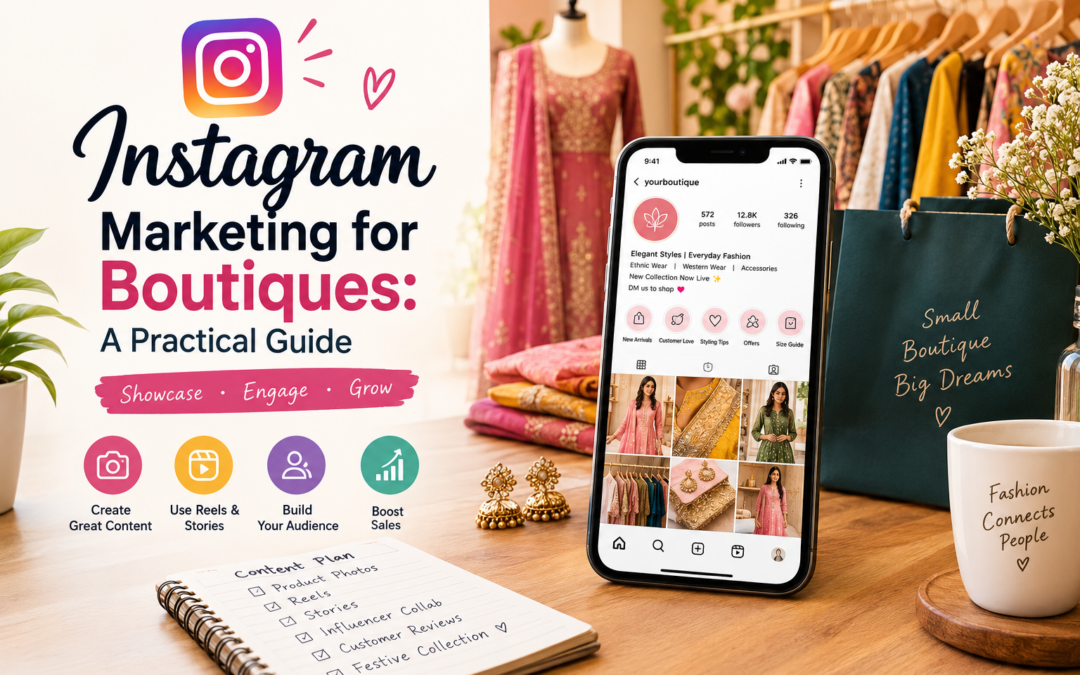
1. Create an Attractive Instagram Business Profile
Our Instagram profile is often the first thing potential customers see. A clear and professional profile helps visitors understand what we sell and how they can purchase our products.
To create an effective boutique profile, we should focus on the following elements:
- Username: Choose a simple username that matches our boutique name and is easy to remember.
- Profile picture: Use a clear logo that represents our brand.
- Bio: Explain what we sell and what makes our boutique special.
- Contact information: Add an email address, phone number, or WhatsApp contact where appropriate.
- Website link: Include our online store or website if available.
- Instagram Highlights: Organise important information into categories such as New Arrivals, Customer Reviews, Size Guide, Offers, and Shipping.
For example, a boutique bio could be:
Elegant Ethnic & Modern Wear
Discover styles for every occasion.
New collections and styling inspiration.
DM us to enquire or order.
A well-organised profile makes it easier for customers to understand our brand and take the next step.
2. Understand Our Target Audience
Successful Instagram marketing for boutiques starts with understanding the people we want to reach. Not every customer has the same fashion preferences, budget, or shopping habits.
We should identify our target audience by considering factors such as age group, location, preferred clothing styles, spending habits, and shopping interests.
For example, a boutique selling affordable everyday clothing may focus on young adults and working professionals. A boutique specialising in bridal wear may target engaged customers, wedding shoppers, and families preparing for special occasions.
We can learn more about our audience by reviewing comments, Instagram Insights, direct messages, and customer feedback.
When we understand our customers, we can create content that matches their needs instead of posting random product photographs.
3. Post High-Quality Fashion Photos and Videos
Fashion is a visual industry, so the quality of our content plays an important role in attracting attention. Customers want to see how clothing looks, how it fits, and how they can style it.
We should use clear photographs, suitable lighting, attractive backgrounds, and consistent editing. Natural light can work well for showing fabric colours and details.
Our content can include:
- Product photographs: Show new dresses, sarees, kurtis, tops, and accessories.
- Model photographs: Demonstrate how outfits look when worn.
- Fabric close-ups: Highlight embroidery, prints, textures, and stitching.
- Styling videos: Show different ways to wear the same outfit.
- Behind-the-scenes content: Share packaging, collection preparation, and boutique activities.
We should also show products from different angles whenever possible. Honest product presentations help customers make informed decisions and reduce confusion about colours, sizes, and materials.
4. Use Instagram Reels to Reach New Customers
Instagram Reels are useful for presenting fashion products through short, engaging videos. They can help boutiques introduce new collections and reach people who do not already follow their accounts.
We can create Reels around popular fashion questions and everyday shopping needs.
For example:
- Five kurti styles for everyday wear.
- Three ways to style one saree.
- New arrivals under ₹999.
- Festive outfit ideas for Durga Puja.
- Before-and-after outfit styling.
- A quick tour of our latest collection.
- How we pack a customer’s boutique order.
We should capture attention in the opening seconds, keep the video focused, and use on-screen text to communicate the main message. Relevant audio can support the content, but the product should remain the main attraction.
We should finish with a simple call to action, such as “Save this outfit idea,” “Follow us for new arrivals,” or “DM us for prices and sizes.”
5. Use Instagram Stories to Build Customer Relationships
Instagram Stories help us share timely updates and interact with followers in a casual way. They are particularly useful for boutiques because fashion customers often want information about new arrivals, availability, offers, and upcoming collections.
We can use Stories to:
- Announce new arrivals.
- Share limited-time offers with clear terms.
- Conduct polls about preferred colours and designs.
- Answer frequently asked questions.
- Share customer feedback with permission.
- Show behind-the-scenes videos.
- Remind followers about upcoming launches.
For example, we can post a poll asking, “Which colour would you choose: pastel pink or royal blue?” This encourages followers to participate and helps us understand their preferences.
Regular, useful Stories keep our boutique visible to existing followers and create more opportunities for conversations.
6. Write Engaging Captions and Use Relevant Hashtags
A good caption explains the product, highlights its benefits, and encourages the audience to take action. Instead of writing only the product name, we should provide useful details about its style, occasion, fabric, or availability.
For example:
Caption example:
Your next festive favourite is here! ✨
Discover our latest ethnic wear collection, featuring elegant designs for family gatherings, celebrations, and special occasions.
Which colour would you choose? Tell us in the comments.
DM us for product details, sizes, and availability.
#BoutiqueFashion #EthnicWear #IndianFashion #BoutiqueStyle #FestiveWear
We should choose hashtags that closely match our products and audience. These might include niche fashion terms, clothing categories, and location-specific hashtags.
For a boutique serving Kolkata customers, relevant local terms may help communicate the business’s location to potential shoppers. However, hashtags alone cannot guarantee reach, so we should combine them with useful content, relevant captions, and consistent engagement.
7. Maintain a Consistent Instagram Content Calendar
Posting regularly helps us maintain an active profile and gives customers more opportunities to discover our boutique. However, consistency does not mean publishing content without a plan.
A simple weekly content calendar can help us balance product promotion, education, entertainment, and customer interaction.
| Day | Content idea |
|---|---|
| Monday | New arrivals and product photographs |
| Tuesday | Fashion tips or styling ideas |
| Wednesday | Instagram Reel featuring an outfit |
| Thursday | Customer reviews or frequently asked questions |
| Friday | Festive looks or weekend outfit inspiration |
| Saturday | Behind-the-scenes boutique content |
| Sunday | Bestsellers, polls, or a weekly collection recap |
We can adjust this schedule according to our available time, product launches, seasonal demand, and audience response.
The most important goal is to publish useful content consistently while maintaining product quality and customer service.
8. Collaborate With Fashion Influencers
Influencer collaborations can help boutiques introduce their products to audiences who already follow fashion-related content. We do not always need to work with celebrities or expensive influencers.
Local fashion creators and micro-influencers may be suitable partners, particularly when their followers match our target audience.
Before collaborating, we should review the creator’s content quality, audience relevance, engagement, and previous brand partnerships.
Possible collaboration ideas include:
- Outfit styling videos.
- Boutique visits and collection showcases.
- Product reviews.
- Festive fashion guides.
- Joint giveaways with clear participation rules.
We should agree on deliverables, costs, usage rights, and disclosure of paid partnerships before beginning a campaign. The purpose is to build genuine awareness and attract relevant potential customers rather than simply increase follower numbers.
9. Use Instagram Ads to Reach Potential Customers
Instagram advertising can help boutiques promote products beyond their existing followers. Paid campaigns allow us to test different creative formats, audiences, and marketing messages.
For example, we could promote a new festive collection to people in our service area who are likely to be interested in fashion. If we sell online, we can direct potential customers to our website or another suitable shopping destination.
Common advertising objectives include:
- Brand awareness: Introduce our boutique to more people.
- Engagement: Encourage interactions with our content.
- Traffic: Bring interested users to a website or landing page.
- Sales: Encourage purchases when suitable tracking and sales infrastructure are available.
- Messages: Generate enquiries through supported messaging destinations.
We should start with a manageable budget, use clear product photographs or videos, and test different versions of our advertisements.
Rather than judging success by likes alone, we should monitor meaningful results such as qualified enquiries, website visits, cost per lead, and completed purchases.
10. Build Trust With Customer Reviews and User-Generated Content
Customers often want reassurance before purchasing clothing online. They may have questions about fabric quality, fitting, colours, delivery, or the reliability of the seller.
Customer reviews and genuine product photographs can help address these concerns.
We can encourage satisfied customers to share their experiences and tag our boutique. With their permission, we can feature suitable photographs, video testimonials, or written feedback on our profile.
We should also provide clear information about:
- Available sizes and measurements.
- Fabric and product details.
- Pricing and additional charges.
- Shipping and delivery expectations.
- Exchange and return policies.
- Payment options and customer support.
We should never create fake reviews or present edited product images in a misleading way. Honest communication builds long-term customer trust and supports repeat purchases.
11. Track Instagram Insights and Improve Performance
Instagram Insights helps eligible professional accounts understand how their content performs. We should review these results regularly to identify which posts attract the most relevant attention.
Important metrics include:
- Reach: The number of unique accounts that saw our content.
- Views and plays: Useful measures for understanding video exposure, depending on the format.
- Engagement: Likes, comments, shares, and other interactions.
- Saves: An indication that people may want to revisit a post.
- Profile activity: Actions taken on our profile.
- Website clicks and enquiries: Useful for evaluating customer interest.
- Conversions: Purchases or other desired actions when they can be measured reliably.
For example, if styling Reels generate more enquiries than ordinary product photographs, we can experiment with publishing more styling videos.
We should evaluate results over time instead of making decisions based on a single post. This helps us understand what our audience values and where we should invest our effort.
12. Common Instagram Marketing Mistakes Boutiques Should Avoid
Even attractive products may struggle to gain attention when an Instagram account lacks a clear strategy. We should avoid these common mistakes:
Posting without a plan: Random content can make our profile inconsistent. A content calendar helps maintain direction.
Using poor-quality images: Blurry photographs and unsuitable lighting make products difficult to evaluate.
Ignoring comments and direct messages: Delayed responses may cause interested customers to shop elsewhere.
Focusing only on sales: A profile filled exclusively with promotional posts can feel repetitive. We should also share styling tips, inspiration, and helpful information.
Buying followers: Artificial followers do not represent genuine customers and can distort performance measurements.
Ignoring product information: Missing prices, sizes, fabric details, or ordering instructions can create unnecessary barriers to purchase.
Expecting immediate results: Building brand awareness, customer trust, and repeat sales requires consistent effort and regular improvement.
By avoiding these mistakes, we can create a more useful and trustworthy Instagram presence.
Recommended Video Tutorial: Learn Instagram Marketing
Want to improve your Instagram marketing skills? Watch this practical Instagram marketing tutorial for small business to learn how to create engaging Reels, plan content, use Instagram Stories, and promote your business online. These tips can help boutique owners build their online presence and connect with potential customers.
Conclusion
Instagram marketing for boutiques provides a practical way to showcase fashion products, connect with potential customers, and grow a boutique business. With a professional profile, attractive product content, engaging Reels, interactive Stories, relevant hashtags, and responsive customer service, we can create a strong foundation for long-term growth.
We should begin by understanding our target audience, planning consistent content, and presenting our products honestly. As our account grows, we can experiment with influencer collaborations, Instagram advertising, and customer-generated content.
Most importantly, we should measure meaningful results and improve our strategy according to customer behaviour. A successful boutique Instagram account is not just about gaining followers; it is about building trust, creating interest in our collections, and turning that interest into lasting customer relationships.