
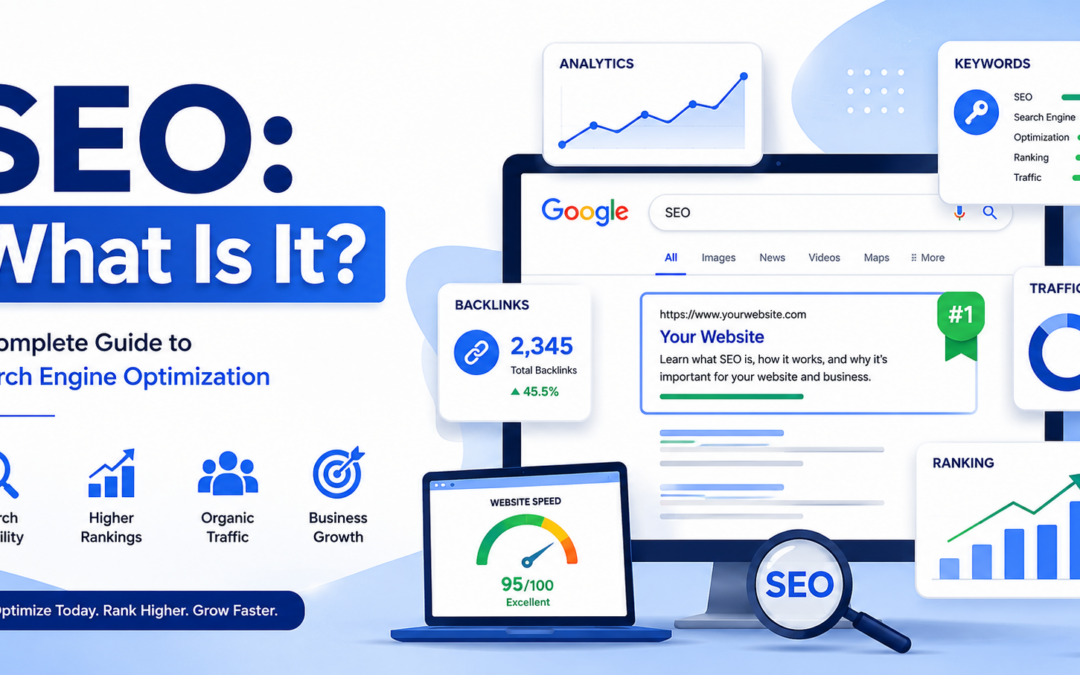
SEO What Is It? Complete Beginner’s Guide to Search Engine Optimization
Search Engine Optimization (SEO) is one of the most effective digital marketing strategies for increasing a website’s visibility in search engines like Google. If you have ever searched for information online, the websites that appear on the first page have likely implemented strong SEO practices.
In this comprehensive guide, we will explain SEO what is it, how it works, why it matters, and the essential techniques businesses use to improve their rankings. Whether you own a business, run a blog, or manage an eCommerce store, understanding SEO can help you attract more visitors and grow your online presence.
What Is SEO?
SEO (Search Engine Optimization) is the process of improving a website so that it ranks higher in search engine results pages (SERPs). The primary objective of SEO is to increase organic (non-paid) traffic by making a website more relevant, trustworthy, and user-friendly.
When users search for phrases like SEO what is it, Google analyzes millions of web pages and displays the most relevant results. Websites that follow SEO best practices are more likely to appear at the top.
SEO is not about manipulating search engines. Instead, it focuses on creating valuable content, optimizing website structure, and delivering an excellent user experience.
How Does SEO Work?
Search engines use automated programs called crawlers or bots to discover websites across the internet. These bots scan web pages, collect information, and store it in Google’s index.
The SEO process generally includes three important stages:
1. Crawling
Google bots visit websites and discover new pages by following internal and external links.
2. Indexing
Once a page is crawled, Google analyzes its content and stores it in its search index if it meets quality standards.
3. Ranking
When someone searches for a keyword such as SEO what is it, Google’s algorithm evaluates hundreds of ranking factors to determine which pages should appear first.
Ranking factors include:
- Content quality
- Keyword relevance
- Website speed
- Mobile responsiveness
- Backlinks
- User experience
- Website authority
- Secure HTTPS connection
Why Is SEO Important?
SEO is one of the highest-return digital marketing investments because it consistently drives targeted visitors without requiring payment for every click.
Some major benefits include:
- Higher search engine rankings
- Increased organic website traffic
- Improved brand visibility
- Greater customer trust
- Better user experience
- Higher conversion rates
- Long-term marketing results
- Cost-effective lead generation
Unlike paid advertising, SEO continues generating traffic long after your content is published.
Different Types of SEO
Understanding the different categories of SEO helps build a complete optimization strategy.
1. On-Page SEO
On-page SEO involves optimizing the content and HTML elements of your website.
Important on-page SEO factors include:
- Keyword optimization
- Meta titles
- Meta descriptions
- Header tags (H1-H6)
- Image optimization
- Internal linking
- URL structure
- Content quality
Creating informative content around keywords like SEO what is it helps search engines understand your page.
2. Off-Page SEO
Off-page SEO focuses on activities performed outside your website to increase authority and trust.
Examples include:
- Backlink building
- Guest posting
- Social media promotion
- Brand mentions
- Online PR
- Business directory submissions
Quality backlinks remain one of Google’s strongest ranking signals.
3. Technical SEO
Technical SEO ensures search engines can easily crawl and index your website.
Key technical SEO tasks include:
- XML sitemap creation
- Robots.txt optimization
- Website speed improvement
- HTTPS security
- Mobile optimization
- Structured data (Schema Markup)
- Fixing broken links
- Canonical tags
Technical SEO creates a strong foundation for better rankings.
4. Local SEO
Local SEO helps businesses appear in searches with local intent, such as:
- Digital marketing agency near me
- SEO company in Kolkata
- Best bakery nearby
Local SEO includes:
- Google Business Profile optimization
- Local citations
- Customer reviews
- Location-based keywords
- NAP (Name, Address, Phone Number) consistency
How Keywords Help SEO
Keywords are the words people type into Google.
For example:
- SEO what is it
- What is SEO
- SEO meaning
- SEO explained
- Search Engine Optimization guide
Using keywords naturally throughout your content helps search engines understand the page’s topic.
Best places to include keywords:
- Title
- URL
- Introduction
- Headings
- Image alt text
- Meta description
- Conclusion
Avoid excessive keyword repetition, as it can negatively impact rankings.
Essential Components of SEO
High-Quality Content
Content remains one of the strongest ranking factors.
Effective SEO content should be:
- Original
- Informative
- Well-structured
- Easy to read
- Updated regularly
- Focused on user intent
Google rewards websites that answer users’ questions comprehensively.
Backlinks
Backlinks are links from other websites pointing to your website.
Benefits include:
- Higher authority
- Better rankings
- Increased trust
- Faster indexing
Quality matters more than quantity. A few authoritative backlinks are more valuable than many low-quality ones.
Website Speed
Fast-loading websites improve user experience and reduce bounce rates.
Ways to improve speed:
- Compress images
- Enable browser caching
- Minify CSS and JavaScript
- Use a Content Delivery Network (CDN)
- Choose reliable hosting
Mobile Optimization
Most internet users browse on smartphones.
A mobile-friendly website should have:
- Responsive design
- Readable text
- Fast loading
- Easy navigation
- Clickable buttons
Google uses mobile-first indexing, making mobile optimization essential.
User Experience (UX)
A positive user experience encourages visitors to stay longer.
Improve UX by:
- Clear navigation
- Attractive design
- Logical page structure
- Helpful content
- Minimal pop-ups
- Fast performance
Common SEO Mistakes to Avoid
Many beginners unknowingly make SEO mistakes that hurt rankings.
Avoid:
- Keyword stuffing
- Duplicate content
- Broken links
- Slow-loading pages
- Missing title tags
- Ignoring mobile users
- Poor internal linking
- Low-quality backlinks
- Thin content
Consistently monitoring your website helps identify and fix these issues.
Popular SEO Tools
Professional SEO campaigns often use tools to monitor performance and identify opportunities.
Popular tools include:
- Google Search Console
- Google Analytics
- Google Keyword Planner
- Ahrefs
- SEMrush
- Moz
- Screaming Frog SEO Spider
- Ubersuggest
These tools help with keyword research, technical audits, backlink analysis, and performance tracking.
How Long Does SEO Take?
SEO is a long-term strategy. While some improvements may appear within a few weeks, significant ranking growth typically takes 3 to 6 months, depending on factors such as competition, website authority, content quality, and optimization efforts.
Consistent publishing, technical improvements, and earning quality backlinks contribute to sustainable SEO success.
Future of SEO
SEO continues to evolve with changes in search engine algorithms and user behavior.
Current trends include:
- AI-powered search
- Voice search optimization
- Core Web Vitals
- User experience signals
- Semantic search
- Helpful content updates
- Video SEO
- Visual search
Businesses that adapt to these trends are more likely to maintain strong search visibility.
Frequently Asked Questions (FAQs)
What does SEO stand for?
SEO stands for Search Engine Optimization, the practice of improving a website’s visibility in organic search results.
Is SEO free?
SEO itself does not require paying for clicks, but investing in quality content, technical improvements, and professional optimization can significantly improve results.
Can beginners learn SEO?
Yes. Anyone can learn SEO by understanding keywords, content optimization, technical SEO, and link building, then applying these practices consistently.
Why is SEO important for businesses?
SEO increases website visibility, attracts targeted visitors, builds trust, improves brand awareness, and generates long-term organic traffic.
What is the difference between SEO and paid advertising?
SEO focuses on earning organic rankings through optimization, while paid advertising places sponsored listings in search results in exchange for advertising costs.
Learn SEO with Deepak Kanakaraju (Digital Deepak)
If you’re looking to deepen your understanding of SEO, we recommend learning from Deepak Kanakaraju (Digital Deepak). His YouTube videos explain SEO concepts in a simple and practical way, making them ideal for beginners and digital marketing professionals.
Recommended topics to watch:
- SEO Fundamentals
- Keyword Research
- On-Page SEO
- Off-Page SEO
- Technical SEO
- Link Building
- Google Search Console
- Content Marketing
- SEO Audits
- Complete SEO Course for Beginners
Watch here:
👉 Digital Deepak YouTube Channel: https://www.youtube.com/@digitaldeepak21
Or explore his SEO videos directly
Conclusion
Understanding SEO what is it is the first step toward building a successful online presence. Search Engine Optimization combines high-quality content, strategic keyword usage, technical excellence, user-friendly design, and authoritative backlinks to improve search visibility. By consistently applying these best practices, businesses and website owners can increase organic traffic, strengthen credibility, and achieve long-term growth in search engine rankings. Whether you are launching a new website or improving an existing one, investing in SEO is one of the most effective ways to reach your target audience and stay competitive in today’s digital landscape.
People Also Ask
1. What is SEO in simple words?
SEO is the process of improving a website so it ranks higher on search engines like Google and attracts more organic traffic.
2. Why is SEO important?
SEO helps businesses increase visibility, drive targeted visitors, build trust, and generate long-term leads without paying for every click.
3. What are the main types of SEO?
The four main types are On-Page SEO, Off-Page SEO, Technical SEO, and Local SEO.
4. How long does SEO take to show results?
Most websites begin seeing measurable improvements within 3–6 months, depending on competition and optimization efforts.
5. Is SEO better than paid ads?
SEO provides sustainable, long-term organic traffic, while paid ads deliver immediate visibility but stop when the advertising budget ends.
Need Professional SEO Services?
If you’re looking to improve your website rankings, increase organic traffic, and grow your business online, our SEO experts can help you build a customized strategy that delivers measurable results. Contact us today to start your SEO journey.
Ready to improve your Google rankings? Contact us today for professional SEO services that increase organic traffic, improve search visibility, and help your business grow online.https://digitalakash.co.in/